
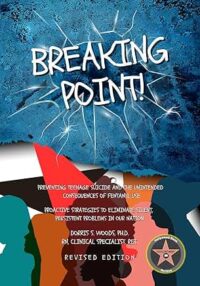
Title: Breaking Point: Fighting to End America’s Teenage Suicide Epidemic!
Author: Dorris S. Woods, Ph.D., RN
Publisher: Olympus Story House
ISBN: 978-1963851373
Genre: Mental health/Self-Help
Pages: 224
Reviewed by: Allison Walker
Hollywood Book Reviews
 In Breaking Point, Dorris S. Woods, Ph.D. and retired RN and clinical specialist, delves fearlessly into the poignant and often misunderstood topic of teenage suicide. Using the extensive research upon which Woods built her dissertation on this very subject as a foundation for her book, the author effortlessly shifts years of study and clinical experience to a less academic readership. Breaking Point is a compelling blend of personal anecdotes, scientific rigor, and engaging storytelling through which Woods offers a profound exploration of the external and internal trigger factors that lead young people to tragic ends.
Despite her impressive clinical background in the subject, Woods writes in a way that is easy for any reader to connect with. Breaking Point is a masterful synthesis of research and real-life vignettes, and paints a vivid and emotional portrait of the profound impact of suicide on victims, their families, and society. Perhaps Woods can write so emotively about this subject because her own family very nearly became casualties of a similar loss. Years later, as Woods began her dissertations, her initial topic was the relationship between substance abuse and suicide. As she delved into her research though, Woods realized what topic she really needed to cover, one that would have a lasting and positive impact on the human condition. With meticulous research and a compassionate heart, Woods dismantles the stigma surrounding teenage suicide and brings to light the complexities of this deeply sensitive issue.
Woods admits that despite decades of trying to solve the puzzle, no one really knows why people choose to end their own lives. Rising to the challenge nonetheless, Woods skillfully navigates through various facets that contribute to teenage suicide, from the tumultuous hormones that accompany puberty to perceived social isolation, and more. She deftly examines the influence of substance abuse and childhood trauma, and contemplates upon each individual’s personal resilience. One thing all suicide victims do have in common, though? Psychache: the condition of mental anguish experienced by those who contemplate suicide. As family members and friends of at-risk teenagers, Woods provides strategies for supporting loved ones who are experiencing psychache and how to get help when a loved one is contemplating suicide.
What sets Breaking Point apart is its practicality. Woods shares anecdotes but also spends many pages identifying risk factors and offering strategies for prevention and intervention. She analyzes everything from gender dynamics and sociocultural aspects to music preferences and “the contagious effect,” and emphasizes how the family environment can influence a person’s emotional landscape. Her “what to do’s” and “what not to do’s” provide invaluable guidance, rooted in both empathy and evidence-based practices. Knowledge is powerful, as the old adage goes. This approach not only empowers readers with knowledge but also equips them with actionable steps to support struggling teenagers.
Breaking Point is a crucial contribution to the literature on mental health and adolescent well-being. Woods challenges readers to confront uncomfortable truths while offering hope through informed action. Her expertise and ability to communicate complex issues with clarity and compassion makes “Breaking Point” accessible and compelling. A blend of scientific rigor and compassionate storytelling ensures that her book will resonate with readers long after you turn the final page.